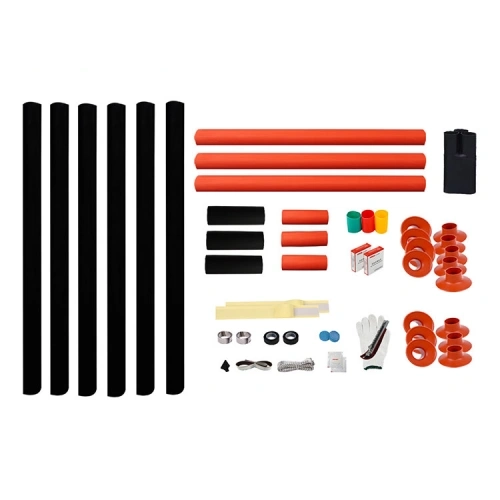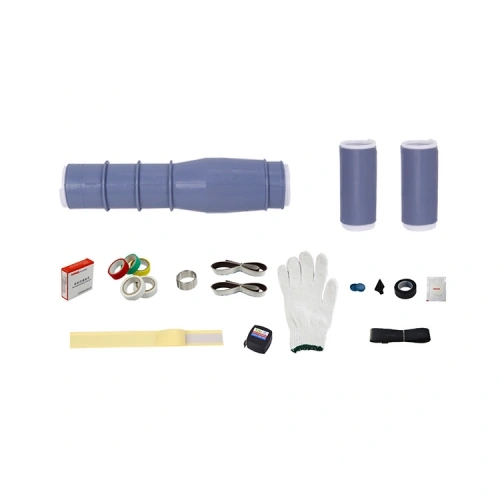
Existing Porcelain Termination Replacement
Replacing an older porcelain-insulated cable termination while reviewing the retained cable, support flange and existing electrical connections.
Main check: Replacement dimensions and support suitability
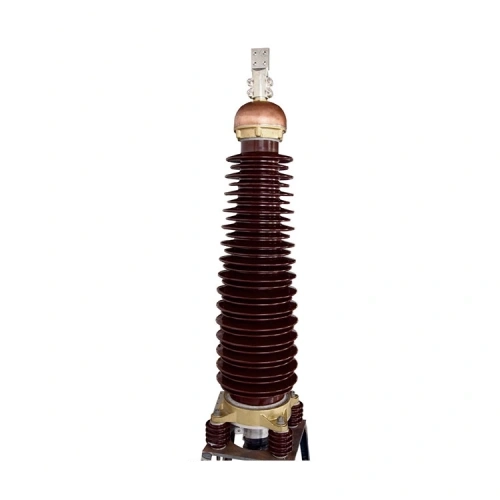
The RIKI 64/110kV porcelain-insulator outdoor cable termination is intended for single-core XLPE power cables, with eight published conductor-size options from 240 to 1200 mm². Its porcelain insulating body provides an externally ribbed termination structure, while the catalog lists electrical test references for the broader 110kV accessory series. Buyers should review porcelain condition, support-flange compatibility and cable dimensions before approving the termination for an outdoor installation.
A 110kV outdoor termination may meet the electrical requirements on paper and still present difficulties when it arrives at the substation. A damaged porcelain shed, an incompatible mounting flange or an unsuitable support arrangement can delay installation before the cable is even prepared.
This makes the physical condition and mechanical interface of the porcelain assembly an important part of product selection.
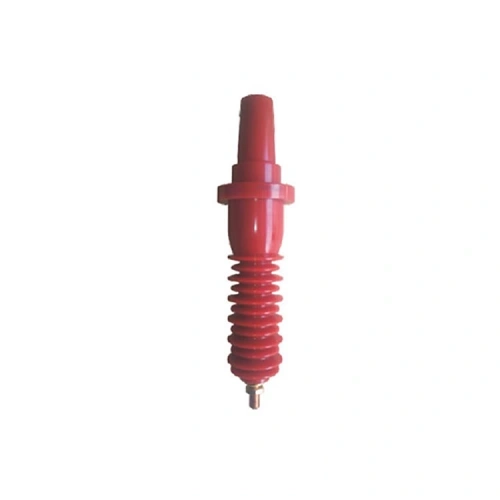
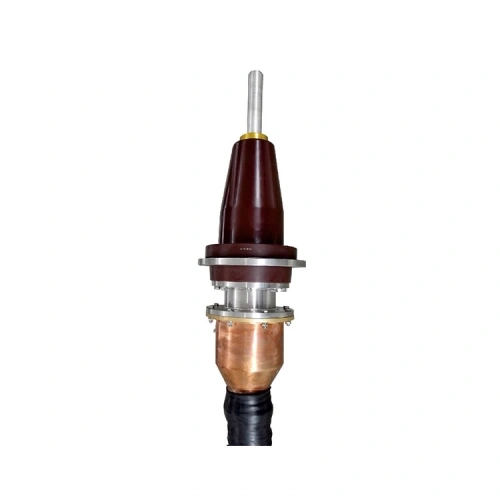
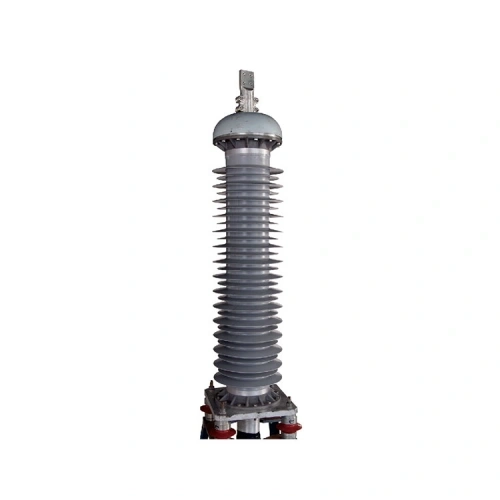
The RIKI 64/110kV porcelain outdoor termination is designed for single-core XLPE power cables. The published type table covers conductor sizes from 240 to 1200 mm². Its ribbed porcelain housing forms the external insulating structure between the high-voltage connection and the supporting arrangement below.
Porcelain provides a rigid insulating surface, but it also requires careful handling during transport, unloading and installation. An impact that chips a shed or damages the porcelain near a flange cannot be dismissed as a cosmetic issue without inspection.
The receiving team should check the accessible porcelain surfaces, shed edges, attachment regions and packaging condition. Any visible cracks, significant chips or suspected damage should be reported for technical assessment before installation proceeds.
The manufacturer’s approved handling instructions must determine how the termination is lifted and supported. The conductor terminal at the top should not be assumed to be a suitable lifting point.
The rated voltage does not determine the mechanical suitability of a support structure. The installed termination must be supported at its approved mounting interface, with sufficient consideration given to its mass, orientation and the loads specified for the project.
For a replacement installation, the existing mounting flange may appear compatible with the new assembly. That appearance is not proof that the bolt pattern, sealing arrangement, supported load or installed height will match.
Compare the manufacturer’s current flange drawing against the support structure before ordering. If the project changes from a different insulator construction to porcelain, the mechanical arrangement deserves a separate review rather than a simple product substitution.
Outdoor insulation is exposed to rain, humidity and surface contamination. The porcelain sheds create an extended surface path along the termination, but the visible number of ribs does not provide the finished creepage distance.
The RIKI catalog publishes a creepage-distance reference of at least 4100 mm and Grade IV pollution severity for its 110kV accessory series. Those figures should be checked against the selected porcelain configuration, applicable test documentation and the project’s environmental classification before they are accepted as product-specific requirements.
A coastal installation, a heavily contaminated industrial location and a comparatively clean inland site may impose different conditions. The project specification should identify the required performance instead of relying solely on the appearance of the porcelain housing.
Eight nominal conductor cross-sections are listed in the catalog: 240, 300, 400, 500, 630, 800, 1000 and 1200 mm². These sizes identify the published ordering range, but they do not define the prepared insulation diameter of every XLPE cable.
The cable’s insulation dimensions, conductor connection, metallic-screen arrangement and required preparation method must correspond to the selected termination assembly. The exact internal insulation and stress-control components should be confirmed using the product-specific technical drawing.
Similarly, the sealing arrangement at the cable entry and the high-voltage terminal connection must be reviewed as part of the complete installation. A porcelain insulator by itself does not establish the suitability of every cable or terminal interface.
RIKI references IEC 60840 and GB/T 11017.3 for its 110kV cable accessory family. For a project submission, the buyer should confirm that the relevant test reports and drawings cover the actual porcelain termination configuration.
Useful documents include the complete assembly drawing, flange dimensions, installation instructions, cable dimensional requirements and applicable electrical test evidence. Mechanical requirements and any handling restrictions should be confirmed before shipment.
Where an existing termination is being replaced, provide the original installation drawing and details of the retained cable. This helps establish whether the new assembly can be installed without modifying the support, cable route or electrical connection.
The final purchase decision should account for transport, site handling, mechanical support and cable compatibility together. These practical conditions matter just as much as selecting the correct voltage class.
| Product Name | 64/110kV Outdoor Cable Termination with Porcelain Insulator |
|---|---|
| Model | YJZWFY4-64/110kV |
| Brand | RIKI |
| Manufacturer | Zhejiang Ruikai Electric |
| Product Category | High Voltage Cable Accessories |
| Product Type | Outdoor High Voltage Cable Termination |
| Rated Voltage (U0/U) | 64/110kV |
| Applicable Cable | Single-Core XLPE-Insulated Power Cable |
| External Insulation | Porcelain Insulator with Ribbed Sheds |
| Installation Environment | Outdoor |
| Mounting Arrangement | Flanged Support Arrangement; Dimensions to Be Confirmed |
| Conductor Connection | Terminal Connection Subject to Approved Product Drawing |
| Available Conductor Cross-Sections | 240, 300, 400, 500, 630, 800, 1000 and 1200 mm² |
| Published Cable Size Options | |
| Option 1 | 1 × 240 mm² |
| Option 2 | 1 × 300 mm² |
| Option 3 | 1 × 400 mm² |
| Option 4 | 1 × 500 mm² |
| Option 5 | 1 × 630 mm² |
| Option 6 | 1 × 800 mm² |
| Option 7 | 1 × 1000 mm² |
| Option 8 | 1 × 1200 mm² |
| Published 110kV Series Technical References | |
| Power Frequency Withstand Voltage | 160kV / 15 min — Series-Level Reference |
| Partial Discharge | ≤1.5 pC at 96kV — Series-Level Reference |
| Creepage Distance | ≥4100 mm — Published Series Reference; Verify for Selected Assembly |
| Pollution Severity | Grade IV — Published Series Reference |
| Catalog-Referenced Standards | IEC 60840 and GB/T 11017.3; Model-Specific Conformity to Be Verified |
The porcelain product designation and eight cable-size options follow RIKI’s published 110kV catalog. The model code shown is the purchaser-designated code and must be reconciled with the manufacturer’s approved drawing. The electrical and environmental figures above are published series references, not individual product certificates. Confirm the final assembly dimensions, porcelain construction, mechanical requirements and relevant test documentation before ordering.
Check the packaging condition, accessible porcelain surfaces, shed edges and areas near the mounting and end fittings. Visible cracks, significant chips or suspected impact damage should be reported for technical assessment before installation. The receiving inspection should also confirm the ordered voltage class, cable-size selection, supplied components and accompanying technical documents.
The top electrical terminal must not be assumed to be an approved lifting point. Handling methods, lifting accessories and permitted support positions should follow the manufacturer’s instructions for the actual assembly. The product photograph does not identify an approved lifting arrangement. Site personnel should establish the correct procedure before unloading or raising the termination into position.
Only after the mounting arrangement and mechanical requirements have been verified. Check the flange dimensions, bolt pattern, support capacity, installed height and cable entry position. Electrical voltage compatibility alone does not prove that the replacement will fit the existing structure. Where the previous termination used a different insulator construction, review the support arrangement separately.
The RIKI catalog publishes Grade IV pollution severity and a creepage-distance reference of at least 4100 mm for its 110kV accessory series. These entries should be checked against the selected porcelain termination drawing and applicable qualification documents. A project requiring a defined pollution class or creepage distance should obtain evidence for the actual assembly rather than relying on the series description alone.
Replacing an older porcelain-insulated cable termination while reviewing the retained cable, support flange and existing electrical connections.
Main check: Replacement dimensions and support suitability
Planning the support and mounting arrangements for a porcelain-insulated 110kV cable termination in an outdoor substation.
Main check: Flange interface and mechanical requirements
Terminating compatible high-voltage XLPE cables at designated outdoor connection points where the cable route rises toward electrical equipment.
Main check: Cable geometry and termination clearance
Reviewing delivered porcelain termination assemblies for visible damage, model identification, component completeness and the required technical documentation.
Main check: Porcelain condition and approved delivery documents